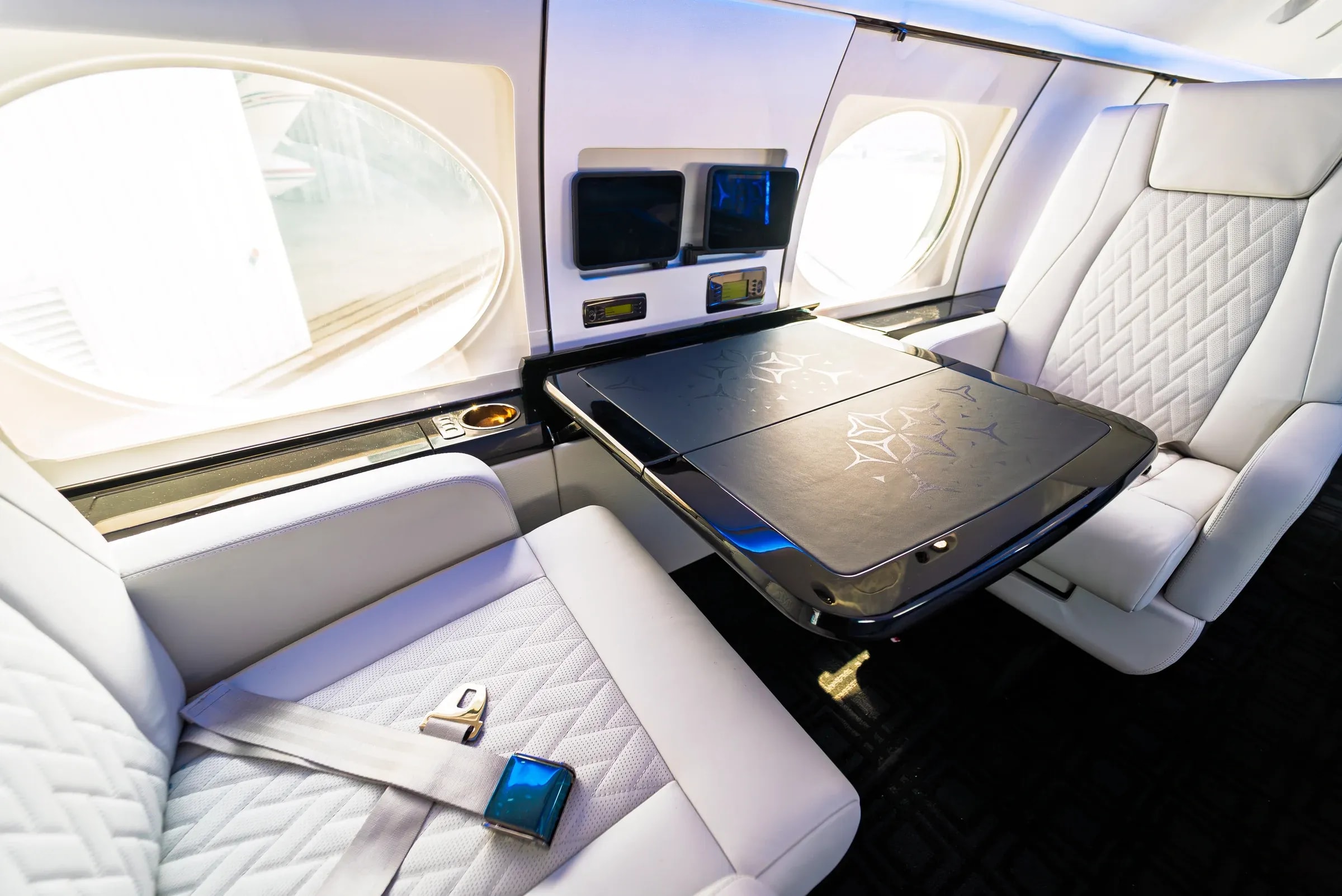
Aircraft carpet is experienced as part of a cabin, even when the first decision happens over a small sample. Its color and pattern sit beside seat bases, cabinetry and lower panels, and continue through the spaces between them. A useful selection process begins with those relationships. Before deciding which sample you prefer, gather the surrounding materials and ask a few questions that will make the conversation with Rex more specific.
1. Which materials are staying?
Identify the seating, cabinetry and panels you intend to retain. Photograph the floor beside each of them, as well as in a wider cabin view. A new carpet becomes part of that existing composition, so it is useful to understand the fixed references before comparing alternatives. If a retained material is difficult to photograph accurately, say so in the brief and provide any product information you already have. An uncertain color match should remain a question for the material review.
2. How much pattern is already visible?
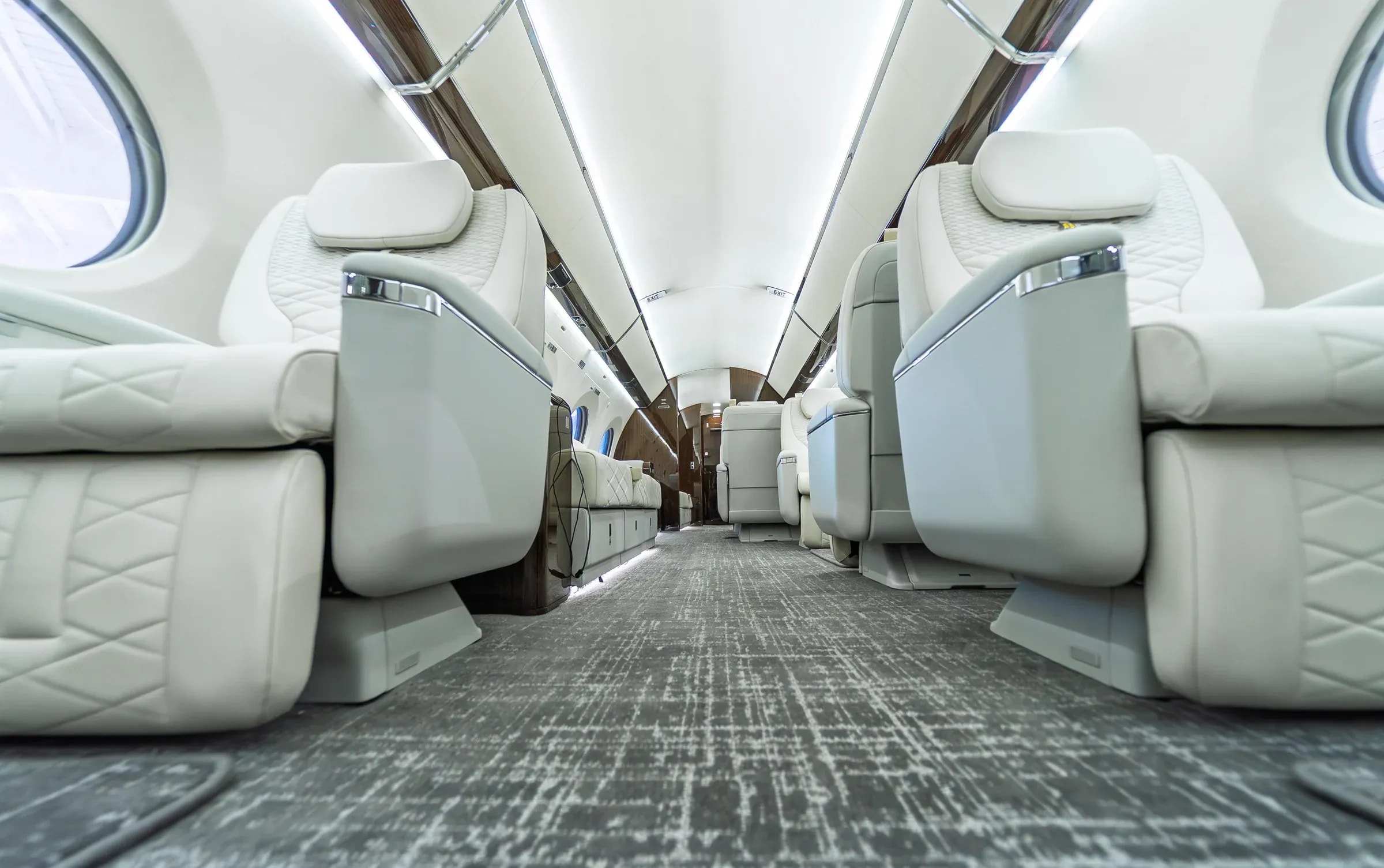
Look at the stitch direction in the seating and the pattern or grain in surrounding surfaces. A carpet pattern introduces another repeated element. The question is how they work together: which is most noticeable, which sits in the background and where the eye can rest. Compare alternatives against the same cabin references. A sample seen alone can encourage a decision based on its own appeal while revealing little about the overall interior it will join.
3. What does the floor look like from the aisle?
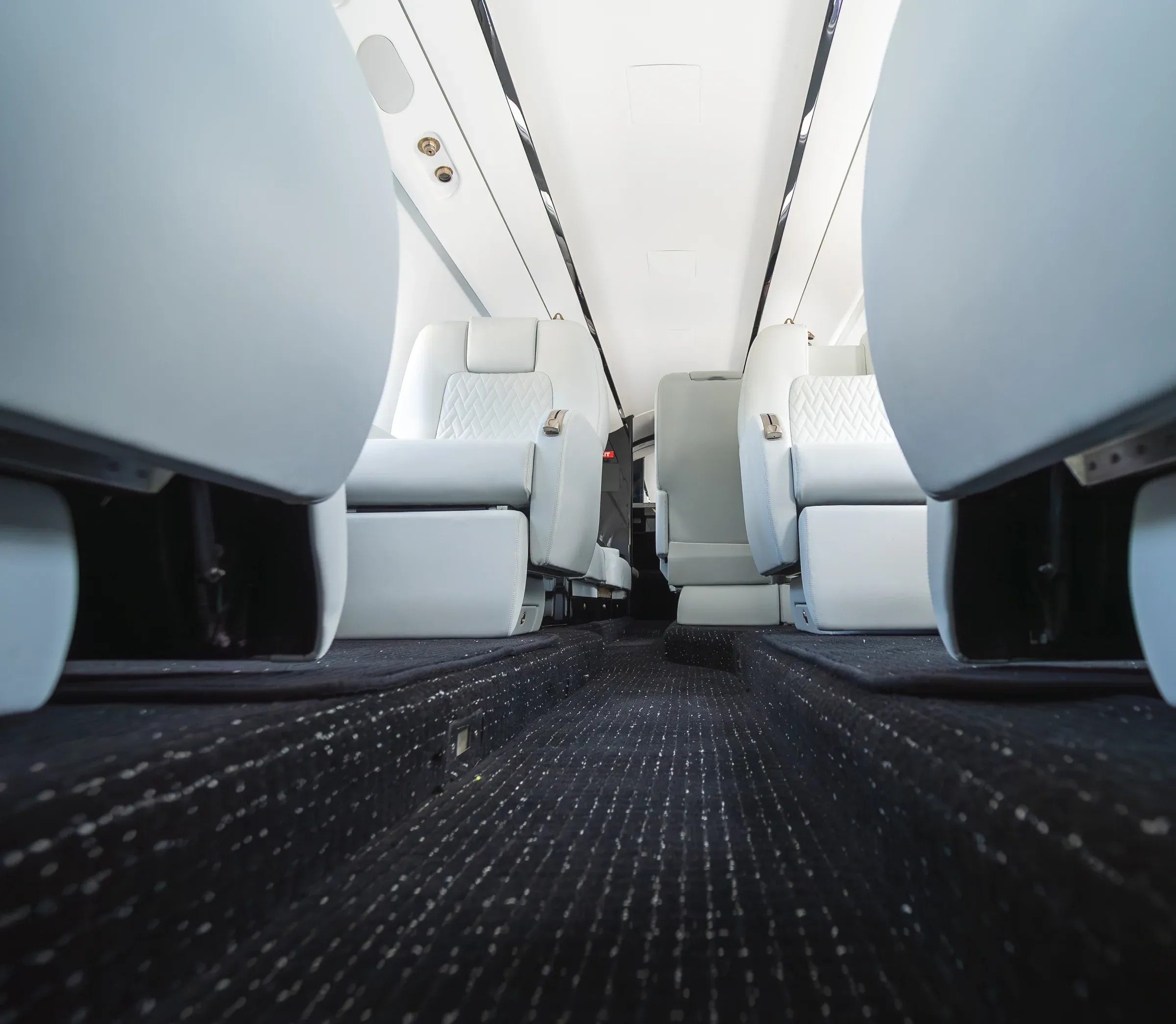
A small sample is useful for close inspection, but the cabin view explains the role of the floor. Consider the visible length of the aisle, the areas between seats and the portions that meet cabinetry. In the G650ER photographs, the gray patterned floor continues beneath pale seat bases and polished wood-toned ledges. The G200 presents a darker floor beside similarly light seating. That is a visual reference for discussing a relationship, not a product specification to transfer to another aircraft. Bring both broad and close photographs so each scale is represented.
Two useful ways to review the same choice.
| Reference | What to observe | What to discuss |
|---|---|---|
| Close view | Compare the sample beside the actual upholstery and finish references. Record what you notice about color, texture and pattern. | Ask which physical material details need to be confirmed for the proposed product and the project. |
| Cabin view | Review how the proposed direction relates to the visible aisle, seat groups and surrounding surfaces. | Ask whether the floor supports the principal cabin palette or introduces more contrast than you intended. |
4. Which transitions deserve a photograph?
Include the floor where it meets visible seat bases, cabinetry and adjoining interior surfaces. These details help explain the current appearance and the intended scope. They are also useful for distinguishing a broad design preference from a particular area you want the team to assess. You do not need to identify an installation method in the inquiry. Describe what you can see, what you want to change and which elements should remain part of the finished interior.
5. How is the cabin used and cared for?
Explain the way the aircraft is used and who will be responsible for the interior’s ongoing care. Share any existing maintenance information or product references that are available. The appropriate care guidance depends on the actual material selected and the relevant documentation. Avoid choosing a cleaning method from an attractive image or a generic online recommendation. A useful question for the project team is what care information will accompany the agreed product and how it should be retained for future reference.
Bring these references to the conversation.
- A wide photograph of the cabin with the floor visible between the seats.
- Close images beside seat bases, cabinetry and other materials you intend to retain.
- A description of the visual direction: quieter, more patterned, lighter, darker or closer to the existing palette.
- Any known product information and questions about the scope, material review or care documentation.
6. What needs to happen before the choice is final?
A digital reference is an efficient way to show the direction you like. The final conversation concerns the actual product options, their suitability for the project and how the selection relates to the real aircraft. Keep a record of the preferred sample and the questions that remain open. If seating or cabinetry is also being considered, review the combinations together so a decision in one area does not leave the rest of the palette unclear.